Newcastle upon Tyne
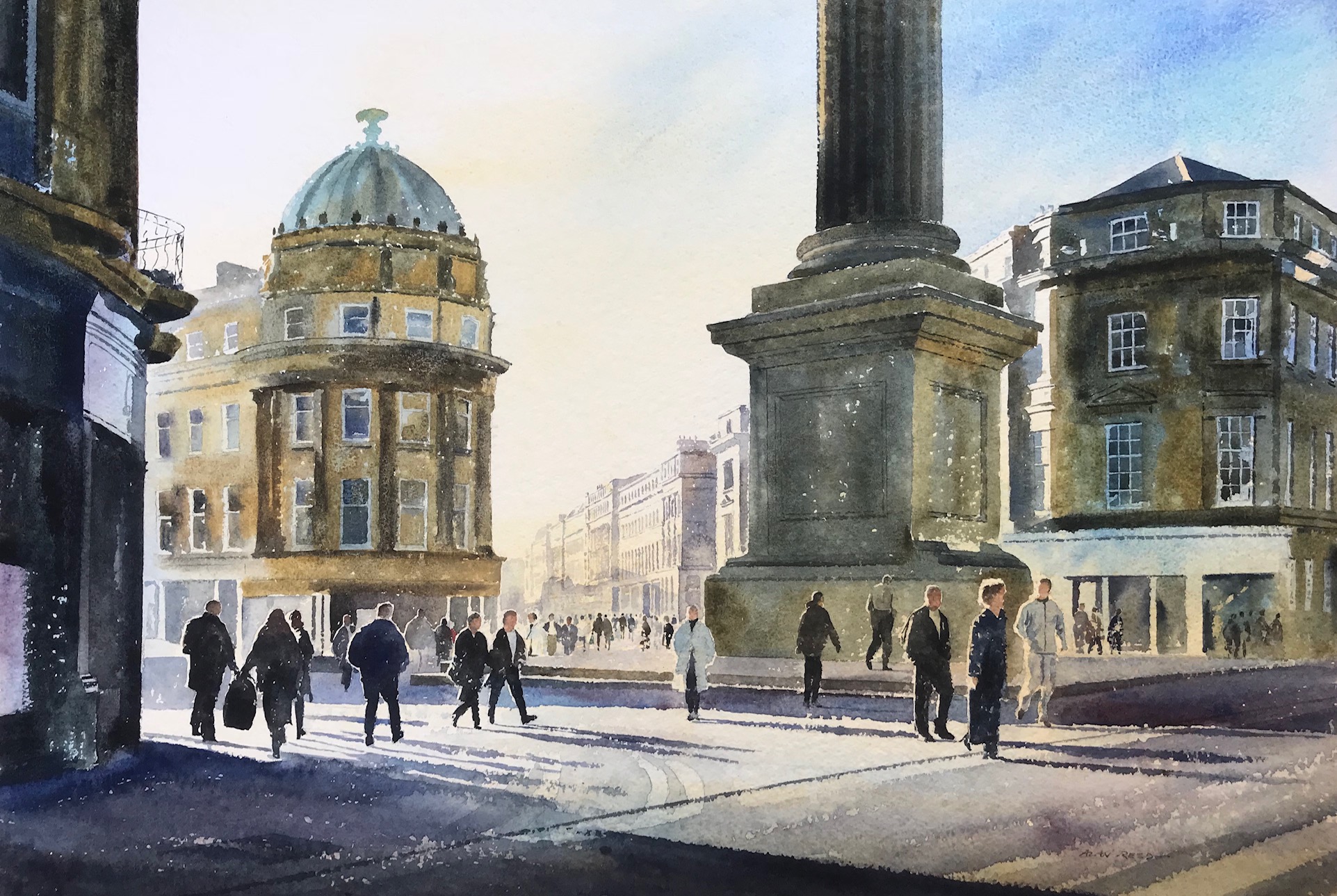
Grey’s Monument is a Grade 1-Listed monument in Newcastle’s city centre. It was built in 1838 in recognition of Charles Grey who was the UK Prime Minister from 1830 to 1834. In particular, it celebrates the passing of the Great Reform Act 1832, one of Grey’s most important legislative achievements. The act reorganised the system of parliamentary constituencies and increased the number of those eligible to vote.
Grey’s Monument is located at the junction of Grey Street, Grainger Street and Blackett Street and has a total height of 133 ft (41 m). It was funded via public subscription and consists of a statue of Earl Grey on a pedestal standing on top of a Roman Doric column. The column was designed by local architect, Benjamin Green, and the statue was created by the sculptor, Edward Hodges Baily.
Metro Station
A contemporary report of the unveiling ceremony described Grey’s Monument as “a fine imaginative work of art” and other 19th century commentators praised it as “a noble effort of genius” and as having “a most commanding appearance”. However, its location, then at the centre of the city’s tram infrastructure, was criticised as unsuitable, with one newspaper declaring that “in its present situation, it will be a great nuisance”.
In the 1920s, there were calls to move the column to improve traffic flow. In 1981, the nearby station on the Tyne and Wear Metro was named after the monument. The pedestrianised area around the base is a popular meeting place and is used as a speakers’ corner.