£975.00
I first encountered Preston Mill as a child through a painting of the mill by one of my favourite artists, Rowland Hilder. Not long after went to visit the mill on one of our family holidays to North Berwick, only 7 miles away. My father painted his own version of Preston Mill which we still have as a family.
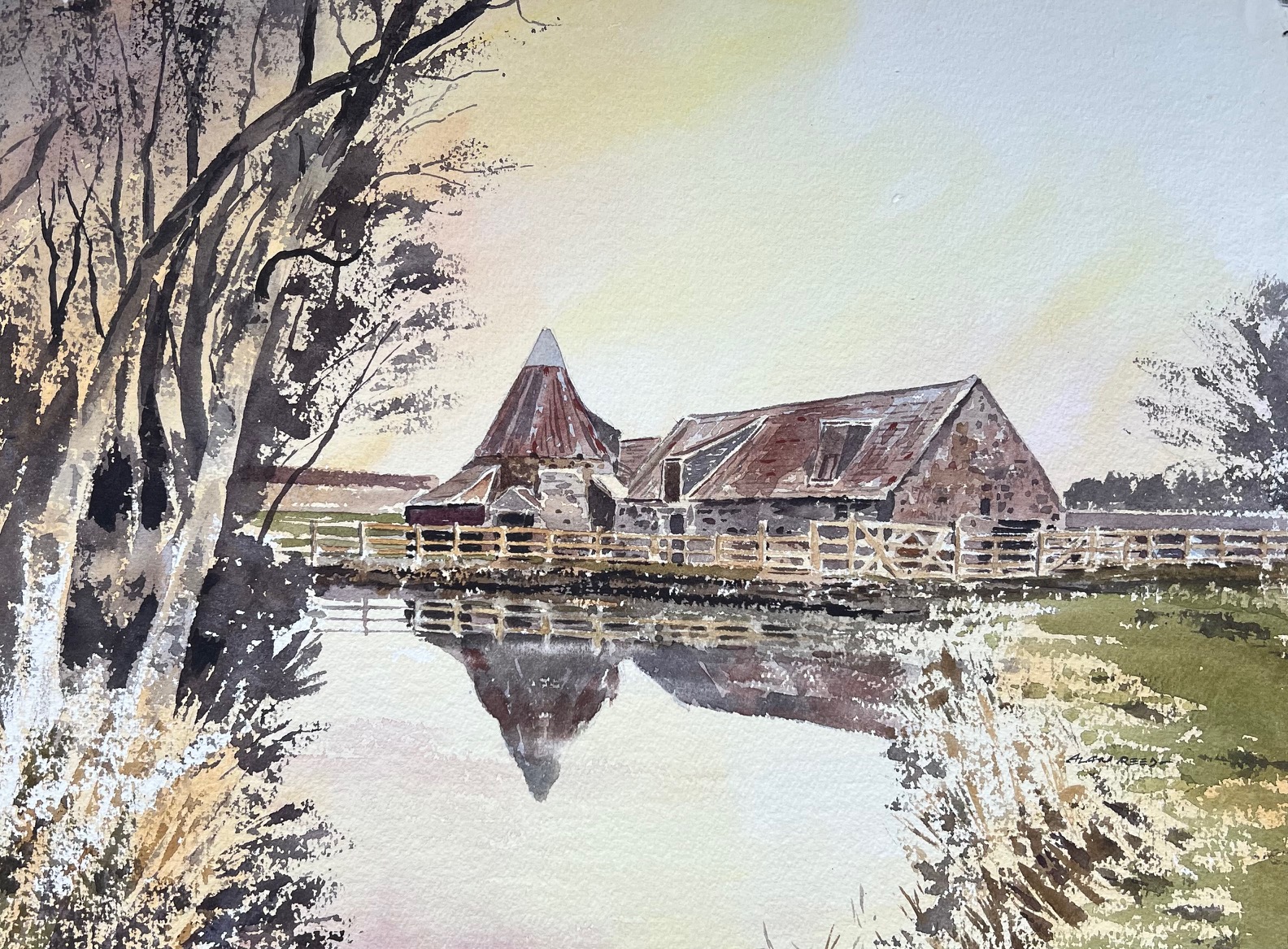
When I had my second exhibition at the Gullane Gallery in 2016 I decided to paint it myself. This is one of two versions, the other being much larger at 21″ x 14″.
I’ve deliberately used a limited palette and used contrasting brush strokes. Loose, expressive brush marks are used to describe the complex foliage and trees. Equally complex are the architectural details of the mill. However, I’ve been more deliberate to ensure they have been painted in sympathy with the period of the architecture.
A timeless scene that is restful and contemplative.
Another painting that uses a similar range of colours is Crail, Coming Home.
When you first see Preston Mill, it’s easy think you’ve taken a step back in time. With its curious Dutch-style conical roof, the mill is an architectural oddity that attracts artists and photographers.
Preston Mill was used commercially until 1959 and was the region’s last working watermill. Guided tours reveal the gruelling nature of the miller’s work, which included heavy lifting and dealing with floods, mice, and dust.
There has been a mill on the site since the 16th century. The present mill dates from the 18th century and is in the care of the National Trust for Scotland. It was used commercially until 1959, and it produced oatmeal. The River Tyne still drives the water wheel, and the machinery can still be seen at work by visitors taking part in a tour. There is also an exhibition about milling and a mill pond.